
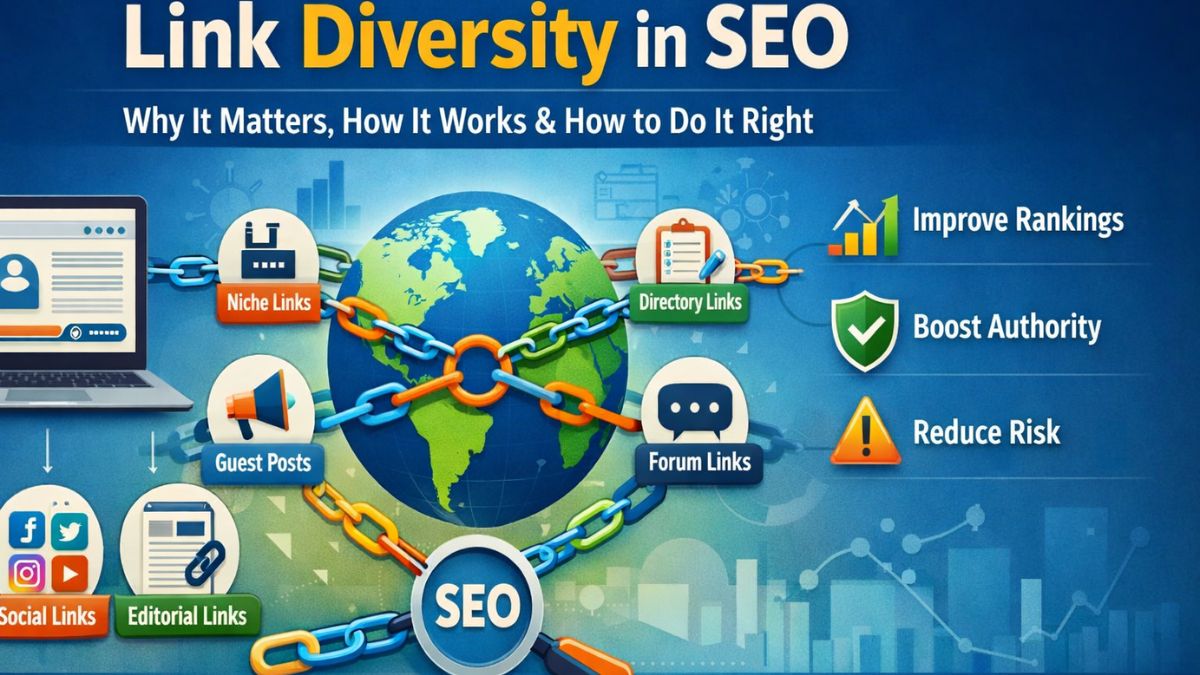
Even though backlinking continues to be one of the most important factors in today’s rankings for search engines, not every backlink is equal. Rather than focusing merely on obtaining lots of links, modern SEO is instead focusing on obtaining a proper mix of links. This is where link diversity becomes important.
What is Link Diversity
Link diversity refers to the quantity of different backlinks pointing to your website. This means that when you build your backlinks, you want to ensure that they come from different domains, types of websites, link formats, anchor text, and even different geographical locations.
Creating a diverse link profile greatly contributes to the overall quality of your backlink profile, since a diverse profile will appear natural, credible, and organic from Google’s perspective.
Why Diverse Link Profiles Is Crucial for SEO Success
Here are the core reasons link diversity has become a fundamental part of SEO:
1. Backlinks Signal Trust and Authority to Search Engines, In a Big Way:
Search engines just about equate backlinks with a vote of confidence – but what those links actually come from really does count for a lot. When links come from a variety of different sources – be it news sites, blogs, educational resources, forums and just general social media platforms – it provides a clearer picture of just how relevant and credible your site actually is.
Example:
- A link from a high-authority industry journal and another from a niche forum show different kinds of trust — combined, they indicate broader recognition.
- A link from a high-authority industry journal and another from a niche forum show different kinds of trust — combined, they indicate broader recognition.
2. Protects Against Search Engine Penalties
A link from a high-authority journal and one from a niche forum each demonstrate different types of trust and, when considered together, suggest a wider recognition.
Assures Protection Against Search Engine Penalties
SEO is not static, as every update to Google’s Algorithms (including Penguin) works towards identifying unnatural linkage patterns. When Google detects an abnormal degree of similarity in your backlink profile to a specific source or type of backlink, it can penalise you algorithmically or drop your rankings.
By varying your backlink types and to from different types of sources, your backlink profile will appear more natural and less likely to be flagged as spammy.
3. Drives Referral Traffic from Multiple Channels
- Backlinks don’t just help with rankings — they send actual users to your website.
- A backlink from a well-known industry blog can drive highly targeted readers who are genuinely interested in your niche.
- A link shared on social media platforms can attract casual visitors who may explore your content while browsing.
- A listing or citation in an online directory can generate consistent, long-term discovery traffic from users actively searching for related services or businesses.
- This multi-source referral traffic increases visibility and engagement opportunities on google for your website.
4. Builds Brand Authority Beyond Search
A backlink from a respected website contributes to your brand’s perceived authority not just by search engines, but by humans too. When users see your site referenced across diverse platforms — professional sites, community forums, media outlets — it boosts credibility and trust.
Dimensions of Link Diversity
To fully understand link diversity, it’s helpful to break it down into its core components:
1. Domain Diversity
This means backlinks from many unique websites rather than thousands from a single domain. A varied domain set tells search engines your content is valued widely.
Examples:
- Corporate blogs
- Industry news sites
- Academic institutions
- Community forums
2. Link Type Diversity
Different kinds of links include:
| Link Type | SEO Value |
|---|---|
| Follow links | Pass ranking authority (“link juice”) |
| Nofollow links | Don't pass authority but add naturalness |
| Contextual links | Embedded in articles, highly valuable |
| Social links | Often nofollow but boost visibility |
A good mix helps prevent over-optimization and mimics natural linking behavior.
3. Anchor Text Diversity
Anchor text should vary between:
- Branded terms (your company name)
- Generic phrases (“learn more”)
- Partial or long-tail keywords
Too many exact-match anchors can look manipulative, so variety signals a more natural linking profile.
4. Geographic Diversity
For businesses operating internationally, obtaining links from domains in different countries or regions can signal global relevance to search engines.
5. Referring Domain Diversity
Closely related to domain diversity is referring domain diversity, which focuses on the types of domains linking to your site. A healthy backlink profile includes a balanced mix of domain extensions, such as .com, .org, .edu, and industry-specific domains.
Search engines interpret this mix as a strong trust signal because it reflects organic recognition from different segments of the internet. For instance, links from commercial sites (.com), educational resources (.edu), nonprofit organizations (.org), and niche authority blogs together indicate broader credibility and real-world relevance.
Relying too heavily on a single domain type — such as only .com blogs or private networks — can appear unnatural. In contrast, diverse referring domains improve ranking stability, enhance authority, and reduce the risk of algorithmic penalties.
How to Build a Diverse Link Profile
Creating a diverse link profile does not happen by chance, and below are steps for creating one:
1. Create Shareable, High-Quality Content
Creating great content that is linkable is the first step in creating a good link-building strategy, including:
– How-to articles and guides that are well-written and go deep in the topic
– New and original research and data, or infographics and visual content
– Many good pieces of content will get links from many different sources.
2. Guest Posting on Related Sites
Creating guest posts on industry or niche websites will give you backlinks and expose your brand to new people. Find quality blogging websites with good domain authority to give you the best return on your efforts.
3. Use Social Channels to Expand Your Reach
Share your content on many social media channels. Even if the majority of social links are nofollow, they still increase visibility and lead to more potential backlinks from other sites.
4. Submit to Reputable Directories
Directory submissions, especially for niche-specific directories, provide some foundational links that will contribute to your backlink profile. Do not submit to low-quality or spammy directories.
5. Work with Influencers and the Press
Mentions from influencers, industry leaders, or the press will help to diversify the link profile, even if they do not pass on any SEO value.
Diversity in Backlinks: Monitoring, Managing and Achieving Success
Creating diversity in your links is just part of the road to achieving an ideal link structure. It’s important to monitor your back-link profile on an ongoing basis using tools such as the following:
- Google Search Console – provides a free basic tool for tracking your back-link profile.
- Ahrefs, SEMrush and Moz – Offers extensive insight into where your back-links come from, how varied your anchor text is and how many referring domains you have.
Conducting regular audits of your back-link profile will allow you to identify overreliance on specific sources as well as any unusual spikes that may indicate a problem with your backlinks.
Pitfalls You May Want to Avoid
When attempting to create diversity in your back-links, there are some common mistakes you should try to avoid:
1. Over-optimizing your anchor text through the use of exact keyword matches.
2. Over-reliance on one source or several sources that belong to the same PBN network.
3. Completely ignoring no-follow links, which play an important role in building natural back-link patterns.
4. An abrupt increase in link acquisition that may be viewed as unnatural.
Final Thoughts
Link diversity isn’t just a trendy buzzword — it’s a strategic pillar of sustainable, long-term SEO. A diverse backlink profile:
- Signals trust and authority
- Reduces risk of algorithm penalties
- Builds broader referral traffic
- Elevates brand credibility
By intentionally building and maintaining a variety of backlinks, you not only help your search rankings — you also strengthen your brand’s presence across the web.